Spec Home Construction Loans in South Florida: A Complete Guide for Developers
.png?width=40&height=40&name=George%20(4).png)
.png?width=40&height=40&name=Elizabeth%20(7).png)
.webp?width=48&height=32&quality=20)
.webp?quality=82&width=1254&height=836&name=iStock-969930396%20(1).webp)
South Florida’s luxury residential market continues to create opportunities for developers who can deliver well-designed, move-in-ready homes in desirable locations. In the first half of 2026, the region’s single-family luxury threshold, representing the top 5% of sales, increased to $3.3 million. The ultra-luxury threshold, representing the top 1%, reached $10.7 million, including $15 million in Miami-Dade County and $14 million in Palm Beach County.
Demand has also remained particularly strong at the upper end of the market. Through May 2026, South Florida sales of homes priced at $1 million or more increased 18.4% year over year, while active housing inventory declined 16.8%. Those figures do not guarantee the success of an individual development, but they demonstrate the continued importance of high-value residential real estate across the region.
For developers, participating in this market requires more than identifying the right lot or designing the right home. A luxury spec project may require substantial capital before the property generates any revenue. Developers must account for land, planning, permitting, construction, carrying costs, contingencies, and the time required to complete and sell the home.
A spec home construction loan can help finance that process while allowing the developer to preserve a portion of their liquidity for project equity, cost overruns, future opportunities, and other business needs.
This guide explains how spec home construction loans work, what lenders evaluate, how construction draws are managed, and what South Florida developers should consider when selecting a financing partner.
What Is a Spec Home Construction Loan?
A spec home construction loan is short-term financing used to build a residential property without an identified end buyer under contract at the beginning of the project.
The term “spec” is short for speculative. The developer builds the home based on an assessment of market demand, with the intention of selling it after or during construction. The developer, rather than a custom-home buyer, assumes the development and sales risk.
A spec home construction loan typically:
- Finances an investment-purpose residential project
- Is secured by the land and improvements
- Disburses construction funds in stages
- Requires the developer to contribute equity
- Is repaid through the sale or refinancing of the completed property
Construction loans are generally short-term facilities, and the loan proceeds are commonly advanced as work progresses rather than released in one lump sum.
This structure differs from financing for an owner-occupied custom home. With a custom build, the end user is already known and is typically involved in selecting the plans, finishes, and contractor. With a spec project, the lender must evaluate whether the proposed home will appeal to a future buyer at the projected price.
The lender is therefore underwriting two connected elements: the developer’s ability to complete the project and the market’s ability to support the planned exit.
Why Spec Home Financing is Different in South Florida
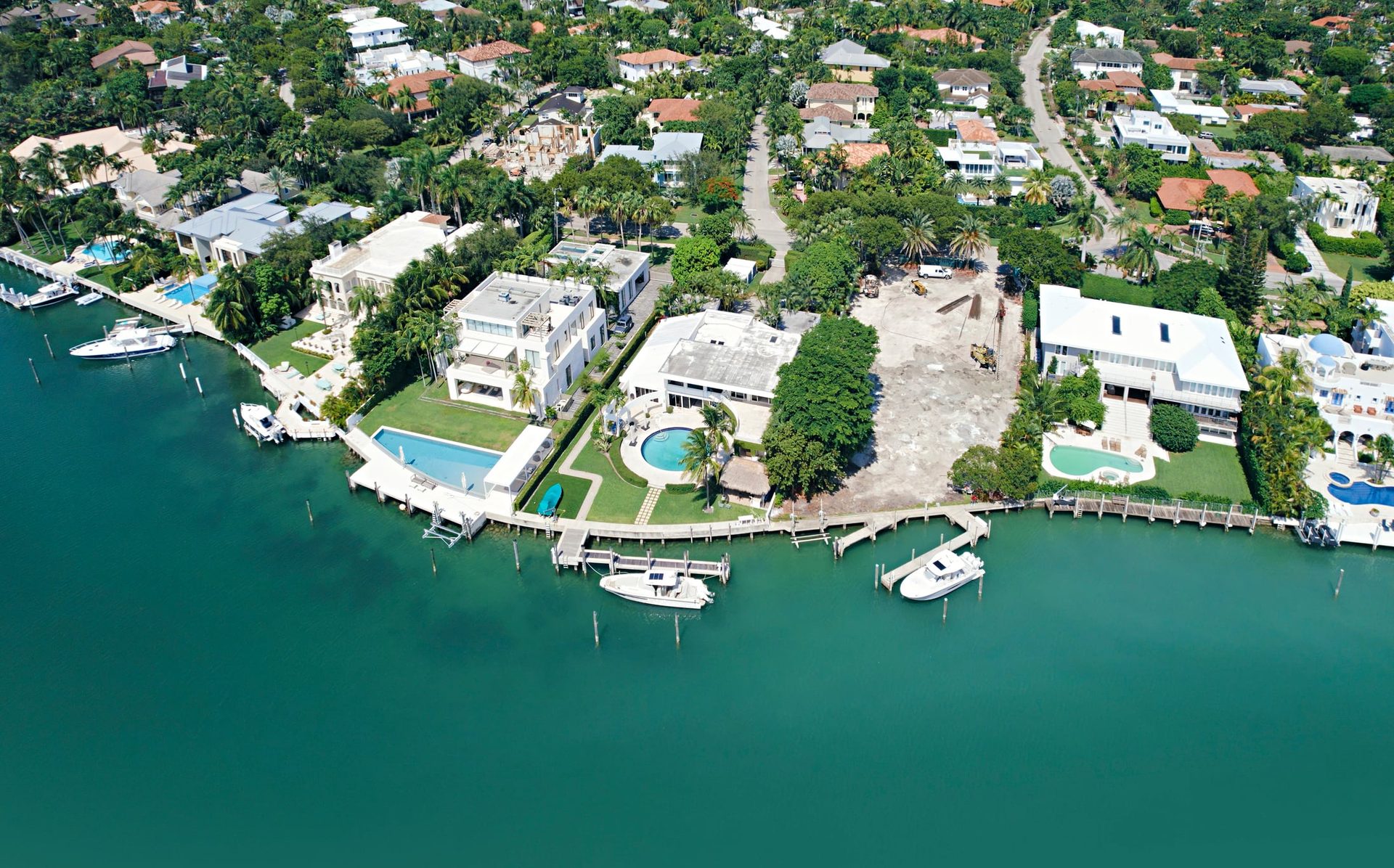
South Florida is not a single, uniform housing market. A waterfront estate in Miami Beach, a new home in Coconut Grove, a large property in Southwest Ranches, and a luxury residence in Palm Beach may have very different buyers, construction requirements, timelines, and exit strategies.
Location alone is not enough. A successful spec development must reflect the expectations of the specific submarket.
Depending on the property, buyers may prioritize:
- Waterfront access and dockage
- Privacy and larger lot sizes
- Proximity to schools, business districts, or lifestyle amenities
- Contemporary architecture
- Turnkey interiors
- Resilient building systems
- Wellness, entertainment, and smart-home features
- Guest accommodations and multigenerational living
South Florida also attracts a combination of domestic and international capital. In a 2025 study of South Florida’s new-construction condominium market,international buyers accounted for 49% of sales across 9,115 units in 37 projects. Although the study covered condominiums rather than single-family spec homes, it reinforces the broader appeal of newly built South Florida inventory to global buyers.
A lender familiar with the region should look beyond a generalized “South Florida” label. The underwriting should consider the specific neighborhood, comparable properties, buyer profile, proposed design, price point, construction budget, and realistic marketing period.
Where Construction Financing Fits Within the Spec Build Cycle
A spec home is rarely a single-stage investment. It moves through a development cycle that can begin well before vertical construction and continue after the home receives its certificate of occupancy.
1. Land acquisition
The first stage is acquiring a vacant lot, teardown property, or partially improved site.
Some developers purchase the land with cash and later obtain a construction loan. Others use a land or bridge loan to complete the acquisition and then refinance that loan once the project is ready for construction.
Before acquiring a site, the developer should evaluate more than the purchase price. Zoning, setbacks, easements, flood exposure, access, utilities, demolition requirements, tree restrictions, and neighborhood design standards can all influence the buildable area and total cost of the project.
2. Pre-development
Pre-development transforms the initial concept into a project that is financeable and buildable.
This stage may include:
- Architectural and engineering plans
- Permit applications
- Surveys and environmental reports
- Soil or geotechnical testing
- Demolition
- Zoning or design approvals
- Contractor selection
- Detailed cost estimates
- Construction scheduling
A project that appears attractive at acquisition can change materially once plans, site conditions, and municipal requirements are fully understood. Developers should maintain sufficient liquidity during this phase and avoid assuming that every pre-development expense will automatically be reimbursed by a future construction loan.
3. Vertical construction
Once the plans, budget, permits, and project team meet the lender’s requirements, the development can move into the primary construction phase.
This is where a spec home construction loan generally becomes most active. Rather than funding the entire construction budget at closing, the lender releases money through a series of draws as eligible work is completed.
4. Completion and Exit
After construction, the developer may sell the property, refinance it with a construction takeout loan, or request an extension under the existing facility if permitted.
The financing plan should account for the period between physical completion and the ultimate sale. A finished home may still require staging, landscaping, final design work, marketing, and carrying costs. A project can be substantially complete from a construction perspective while still needing time and capital to achieve its intended exit.
How Does a Spec Home Construction Loan Work?
Although every loan is structured differently, the process generally includes underwriting, closing, equity funding, staged construction draws, monitoring, and repayment.
Preliminary project review
The lender begins by assessing the overall transaction. Initial information commonly includes:
- Property address and acquisition history
- Current land value or purchase price
- Development plans
- Construction budget
- Project timeline
- General contractor information
- Developer experience
- Existing debt
- Requested loan amount
- Projected completion value
- Intended exit strategy
An experienced lender should be able to identify major concerns early. That does not replace full underwriting, but it can help the developer determine whether the proposed structure is realistic before investing significant time in the application.
Underwriting and due diligence
The lender then reviews the project in greater detail. Depending on the transaction, this may include an appraisal, title work, survey, plans and specifications, permits, insurance, construction contract, entity documents, financial statements, and background information on the sponsor and contractor.
The appraisal may address several values:
- The property’s current or “as-is” value
- The value of the land
- The projected value upon completion
- Relevant sales of comparable completed homes
For a spec project, the projected value must be evaluated together with the time and cost required to reach it. A high projected sales price cannot compensate for an incomplete budget, insufficient liquidity, or an unrealistic construction schedule.
Developer equity
Construction lenders generally require the developer to contribute meaningful equity to the project.
Equity can come from cash invested in the land, pre-development expenses already paid, additional cash contributed at closing, or another source acceptable to the lender. The lender will determine which prior costs qualify as recognized equity.
The timing of the equity contribution also matters. Some loans require the developer’s remaining cash equity to be invested before construction loan proceeds become available. Others may fund on a proportionate basis. Developers should understand this requirement before closing because it directly affects short-term liquidity.
Construction draws
The approved construction budget is divided into line items and linked to a draw schedule. As work progresses, the developer or contractor submits a draw request with supporting documentation.
The lender may review:
- Work completed to date
- Invoices
- Updated budget information
- Change orders
- Lien waivers
- Contractor affidavits
- Remaining funds required to finish
- Inspection reports
Periodic inspections and lien-waiver controls are common risk-management measures in construction lending.
Once approved, the lender disburses eligible funds. This process helps confirm that loan proceeds are being used for the project and that the remaining budget is reasonably sufficient to complete construction.
A draw is not simply a reimbursement formality. It is an ongoing test of whether the project remains aligned with its budget, schedule, and approved plans.
Interest during construction
Many construction loans charge interest based on the amount that has actually been advanced, rather than the entire commitment from the first day. Other structures may calculate interest differently, so the loan documents should be reviewed carefully.
A lender may also establish an interest reserve, which sets aside part of the loan proceeds to pay interest as it accrues. Federal construction-loan guidance recognizes interest reserves and multiple-advance structures, but the treatment and calculation depend on the individual loan.
An interest reserve reduces the need for monthly out-of-pocket interest payments, but it is not free capital. It forms part of the overall loan and must be considered when calculating the net amount available for construction.
Repayment
A spec home construction loan is generally repaid through one of three outcomes:
- The completed home is sold.
- The construction loan is refinanced with a takeout facility.
- The lender approves an extension or modified exit plan.
Developers should not assume that an extension will be available. The original loan term should provide a realistic period for construction, completion, and disposition, with appropriate contingencies for delays.
Understanding Loan-to-Cost and Loan-to-Value
Two important measurements in spec construction lending are loan-to-cost and loan-to-value.
Loan-to-cost
Loan-to-cost, or LTC, compares the loan amount with the total eligible project cost.
For example, if a project has an eligible cost basis of $8 million and the loan is $5 million:
$5 million loan ÷ $8 million cost = 62.5% LTC
The remaining project cost must be covered by developer equity or another source acceptable to the lender.
Loan-to-value
Loan-to-value, or LTV, compares the loan amount with the property’s value. The relevant value may be the current value, the acquisition value, or the projected completed value, depending on the stage and lender’s methodology.
Using the same $5 million loan and a projected completed value of $12 million:
$5 million loan ÷ $12 million value = approximately 41.7% LTV
A loan may satisfy one measurement while failing another. For that reason, lenders often evaluate both cost and value rather than relying exclusively on the projected sales price.
Developers should also confirm what the lender includes in the project cost basis. Historical expenses, internal development fees, furniture, marketing, and other items may not receive the same treatment as land, third-party soft costs, or direct construction expenses.
What Can a Spec Home Construction Loan Finance?
Eligible costs vary by lender and transaction. A construction loan may finance or reimburse portions of the following:
Land or existing debt
If the developer already owns the site, the construction loan may refinance an existing land loan or recognize eligible land equity. In other cases, the land acquisition and construction financing may close simultaneously.
Hard construction costs
Hard costs are expenses directly associated with constructing the home. These may include:
- Site work
- Foundation
- Structural work
- Roofing
- Mechanical, electrical, and plumbing systems
- Windows and exterior finishes
- Interior construction
- Pools and certain landscaping improvements
Soft costs
Soft costs can include architecture, engineering, permitting, surveys, testing, inspections, and other professional or administrative expenses.
Some soft costs may be financed, while others may need to be paid by the developer.
Contingency
A contingency allocation helps address unexpected costs, price changes, field conditions, and approved modifications. The appropriate contingency depends on the project’s complexity, stage of planning, and certainty of the construction pricing.
Interest and loan costs
An approved budget may include an interest reserve and certain financing expenses. The developer should distinguish between the gross commitment and the net amount available for direct project costs.
Costs that may remain outside the loan
Depending on the lender, the developer may need to fund furniture, staging, sales commissions, marketing, certain carrying costs, unapproved upgrades, and overruns beyond the contingency.
The important question is not simply, “How large is the loan?” It is, “How much usable capital will remain for construction after existing debt, reserves, interest, fees, and closing costs are accounted for?”
What Do Construction Lenders Look For?
A lender is not evaluating only the future home. It is evaluating the site, developer, contractor, budget, market, and exit as one connected transaction.
Relevant developer experience
A strong track record can demonstrate that the sponsor understands permitting, contractor management, draw administration, cost control, and luxury buyer expectations.
The most relevant experience is usually experience that resembles the proposed project in geography, product type, scope, and price point.
A developer who has completed smaller renovations may still have valuable experience, but a ground-up luxury estate introduces different operational and financial risks.
A realistic total project budget
The lender will assess whether the budget reflects the plans and current scope of work.
An incomplete budget may omit significant expenses such as demolition, site preparation, utility work, design revisions, municipal fees, insurance, taxes, landscaping, carrying costs, or post-completion expenses.
The budget must also remain balanced. If one line item runs over, the developer and lender need to understand whether savings elsewhere or additional equity will cover the difference.
A qualified project team
The general contractor’s experience and capacity are central to the review. The lender may examine the contractor’s license, prior projects, financial condition, litigation history, subcontractor relationships, and ability to perform the proposed scope.
The architect, engineers, consultants, and owner’s representative can also affect execution. A sophisticated project is more financeable when responsibilities are clear and the team has relevant experience.
Developer equity and liquidity
Equity demonstrates commitment to the project, while liquidity provides the ability to respond when conditions change.
These are not interchangeable. A developer may have substantial equity trapped in the land but limited cash available for deposits, change orders, carrying costs, or temporary draw timing differences.
A well-capitalized project generally requires both invested equity and accessible liquidity.
A defensible exit strategy
For a spec home, the primary exit is often the sale of the completed property. The lender will evaluate the projected price, comparable sales, competing inventory, expected marketing period, and costs required to achieve the sale.
A secondary exit, such as a construction takeout loan, can provide additional flexibility. It should not be treated as an automatic solution, however. The completed property, borrower, leverage, and market must still qualify for the new financing.
Private Construction Lending vs. Traditional Bank Financing
Both banks and private lenders can play important roles in development financing. The better option depends on the project, sponsor, timeline, and priorities.
| Consideration | Traditional Bank | Private Lender |
| Pricing | May offer a lower cost of capital for qualifying borrowers and projects | Typically priced higher to reflect flexibility and speed in execution |
| Approval Process | Often more standardized and documentation-intensive | May allow a more customized, underwriting process based on the project and sponsor |
| Timing | Can require a longer approval and closing process | May be better suited to time-sensitive acquisitions, refinances or construction needs |
| Sponsor Profile | May priortize banking history, recurring income, and conventional credit metrics | May place greater weight on the property, equity, experience, and exit |
| Project Flexibility | Often governed by more standardized policies | May accomodate transitional or complex situations |
| Best Fit | Stabalized, well-documented projects with flexible closing timelines | High-value, time-sensitive, or nonstandard investment projects |
Private financing is not automatically the correct choice for every developer. Its value is generally strongest when certainty, speed, structure, or asset-level expertise is more important than obtaining the lowest available interest rate.
The loan should be evaluated based on its role in the project’s total economics, not the interest rate alone.
Common Spec Home Financing Mistakes
Underestimating the complete capital requirement
A developer may accurately estimate the direct construction budget but overlook pre-development expenses, financing costs, taxes, insurance, marketing, staging, commissions, and the cost of carrying the property after completion.
The result is a project that is adequately funded for construction but underfunded for execution.
Treating the projected sales price as available equity
A high projected value does not fund today’s construction expenses. Developers still need sufficient cash equity and liquidity to meet the lender’s requirements and respond to unforeseen costs.
Profit exists only after the project is completed, sold, and all obligations are paid.
Using an overly aggressive construction schedule
A schedule should account for permitting, mobilization, subcontractor availability, inspections, specialized materials, design changes, and weather-related disruption.
An unrealistic schedule can understate interest expense and create pressure near maturity.
Failing to align the draw schedule with contractor obligations
Contractors and suppliers may require deposits before materials are delivered or work is completed. The lender may release funds only after a defined milestone or inspection.
Developers should compare the contractor’s payment schedule with the lender’s draw process before closing. Misalignment can create avoidable liquidity gaps.
Making upgrades without revisiting the budget
Luxury buyers may reward exceptional design, but mid-project upgrades can materially affect costs and completion timing.
Change orders should be evaluated based on their total impact, not only the incremental construction expense. Additional design work, delays, carrying costs, and required equity may reduce the financial benefit of the upgrade.
Waiting until completion to plan the exit
The sales and takeout strategy should be considered before construction begins.
Developers should understand who the likely buyer is, when the home should be introduced to the market, what final presentation will be required, and whether a takeout option may be needed if the sale extends beyond the construction loan’s maturity.
What Happens When Construction Is Complete?
Completing the home does not automatically complete the financing strategy.
Sale of the property
A sale is the most direct exit. The construction loan is paid from the closing proceeds, along with other transaction costs.
Developers should allow adequate time for listing, negotiation, due diligence, and the buyer’s closing process.
Construction takeout loan
A construction takeout loan refinances the existing construction debt after the home is substantially or fully complete.
It can provide additional time to market the property, repay a maturing lender, or recover a portion of the developer’s equity, subject to the new lender’s underwriting.
Extension of the existing loan
Some construction loans offer extension options, but they may be subject to fees, updated valuations, additional equity, interest reserves, or other conditions.
An extension should be treated as a contingency rather than the primary business plan.
Frequently Asked Questions About Spec Home Construction Loans
Can a construction loan include the purchase of the land?
It may. Some lenders can finance land acquisition and construction within one transaction, while others require the developer to acquire or own the land before the construction loan closes.
The structure will depend on the property, acquisition basis, existing debt, development status, and developer’s equity.
How much equity does a developer need?
There is no universal requirement. The lender will consider the site, total project cost, current value, projected completed value, developer experience, liquidity, and market risk.
Developers should expect to maintain meaningful equity in the project and should not assume that the lender will fund every cost.
Is a pre-sale required?
A single-family spec construction loan generally does not require an end buyer to be under contract at origination. That is what distinguishes a spec home from a custom home built for an identified owner.
Because there is no guaranteed buyer, the lender will closely evaluate the project’s marketability and exit assumptions.
How are construction funds disbursed?
Funds are generally released through draws as eligible work is completed. The lender may require invoices, lien waivers, inspections, updated budget information, and other supporting documents before approving each disbursement.
Does the developer pay interest on the entire loan amount?
Not necessarily. In many structures, interest accrues on the outstanding amount that has been advanced. Other loans may calculate interest differently or include minimum-interest provisions.
The note, loan agreement, and draw terms determine the actual obligation.
How long does a spec construction loan last?
The term should reflect the time needed to complete construction and execute the intended exit. The appropriate term depends on the stage of the project, scope of work, permitting status, property type, and market.
Developers should avoid choosing a term based only on the ideal construction schedule.
Can a first-time developer obtain a spec construction loan?
Possibly, but the lack of a completed-project track record creates additional risk. A first-time sponsor may improve the transaction by contributing more equity, maintaining greater liquidity, hiring an experienced contractor and development team, and pursuing a manageable project.
Approval remains dependent on the lender and overall transaction.
Can foreign nationals obtain spec construction financing?
Some private lenders consider business-purpose loans involving foreign national sponsors. The lender may require additional documentation regarding identity, entity ownership, source of funds, U.S. banking relationships, financial condition, and guaranties.
Eligibility and structure vary significantly by lender.
What happens if the project goes over budget?
The developer is generally responsible for covering costs that exceed the approved loan and contingency.
The lender may require the borrower to deposit additional funds before continuing to advance loan proceeds. Significant changes may also require revised plans, appraisals, approvals, or loan modifications.
What is the difference between a construction loan and a bridge loan?
A construction loan is structured to fund an approved construction budget through staged draws.
A bridge loan usually provides short-term financing for an acquisition, refinance, or transitional property. A developer may use a bridge loan to acquire land or refinance an existing obligation before the project is ready for full construction financing.
What is a construction takeout loan?
A construction takeout loan refinances the construction facility after the property is completed or substantially complete.
For a spec developer, it can provide additional time to sell the home and may reduce the pressure created by an approaching construction-loan maturity.
Wrap Up: Financing a Spec Home in South Florida
Successful spec development requires the right combination of location, design, execution, equity, liquidity, and timing. Financing should support those elements rather than create avoidable pressure at a critical stage of the project.
The right construction lender will look beyond the finished rendering. It will evaluate the full development plan, identify potential gaps, establish a workable draw process, and structure the loan around a realistic path from construction to exit.
Vaster provides private real estate financing for investment-purpose properties and works with experienced South Florida developers across different stages of the spec build cycle, including land acquisition, pre-development, construction, and construction takeout scenarios.
For developers evaluating a new project, the financing conversation should begin early. Understanding the available loan structure before acquiring a site or finalizing the construction contract can help preserve liquidity, align expectations, and create a stronger foundation for execution. For more information or to get a quote, contact us today.
This content is for information purposes only. Loan approval, proceeds, terms, and eligible costs are subject to underwriting, due diligence, and the specific circumstances of each transaction. This is not a commitment to lend.
Sources:
South Florida Luxury Home Market Reaches New Milestones | Miami REALTORS
What is a construction loan? | Consumer Finance Protection Bureau
Global Buyers Purchase 49% of South Florida New Construction Units | Miami REALTORS
Certificate of Occupancy and Certificate of Use | Miami-Dade County