Bridge Loans in Miami: The Private Credit Solution Behind the Spec Home Boom


Miami’s luxury real estate market has continued to defy expectations, even as broader national trends show signs of normalization. Demand for high-end residential properties remains strong, fueled by sustained domestic migration, international capital inflows, and a growing preference for turnkey luxury homes in prime locations.
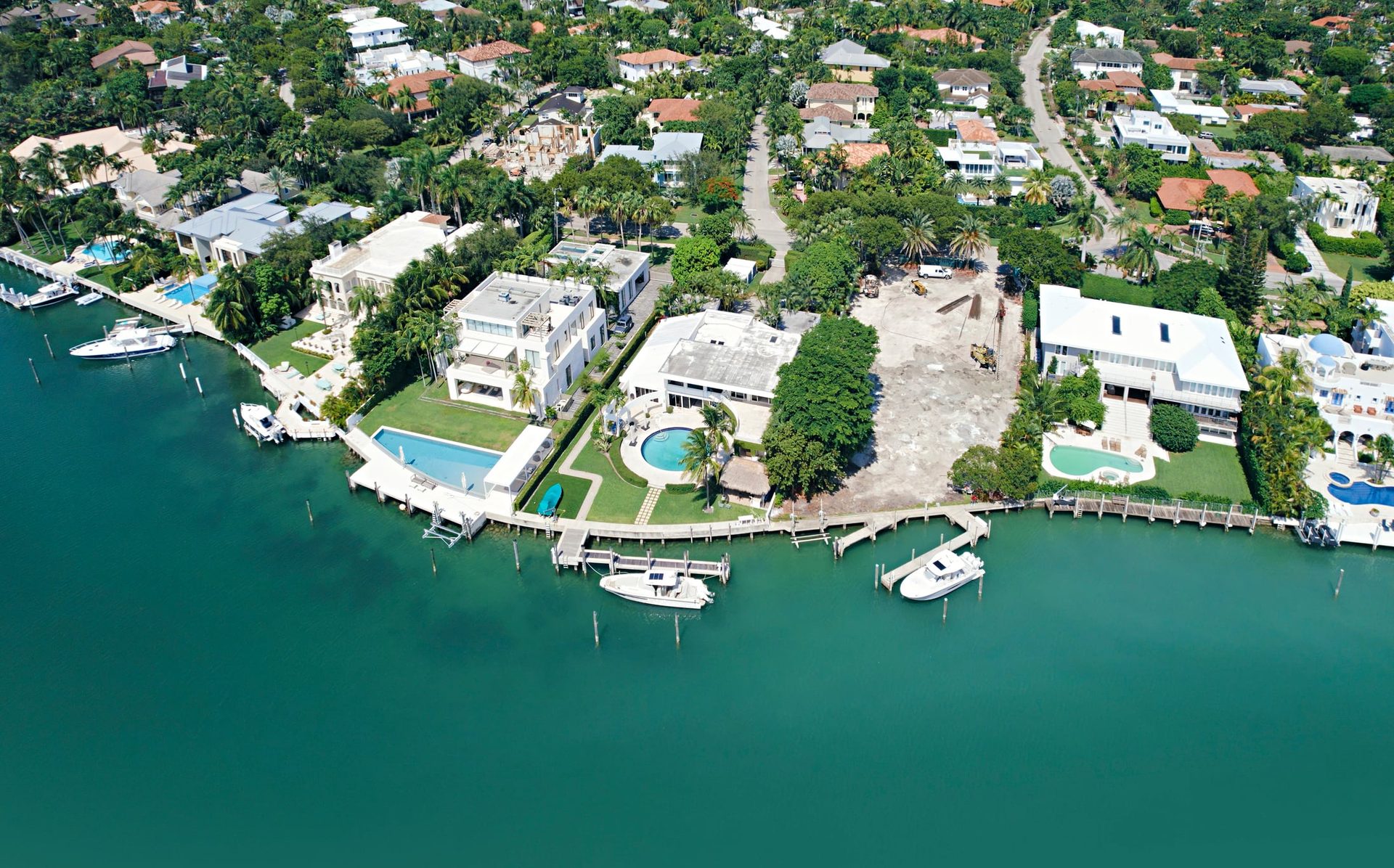
One of the most visible outcomes of this demand has been the rise of spec homes, high-end properties developed without a buyer secured in advance. Across neighborhoods like Coconut Grove, Coral Gables, and Miami Beach, developers are increasingly building with confidence that the market will absorb well-designed, move-in-ready product.
But behind this surge in speculative development lies a critical factor that is often overlooked: access to flexible, short-term capital.
Traditional lenders have become more conservative in construction lending, particularly for projects without presales. As a result, many developers are turning to bridge loans in Miami and private credit solutions to finance acquisitions, fund construction, and execute on tight timelines.
Miami Spec Home Market: Demand Meets Limited Supply
The strength of Miami’s spec home market is rooted in a simple dynamic: sustained demand paired with a limited supply of new luxury inventory.
Over the past several years, Miami has consistently ranked among the top-performing housing markets in the United States. According to data from the Miami Association of Realtors, single-family home prices have continued to trend upward, with steady year-over-year growth even amid higher interest rate environments. At the same time, new construction, particularly at the luxury end of the market, has not kept pace with buyer demand.
This imbalance has created a favorable environment for spec developers. Well-located, thoughtfully designed homes are often absorbed quickly, particularly in waterfront and high-demand residential enclaves.
Unlike production housing markets, where supply can scale more easily, Miami’s luxury segment is constrained by factors such as zoning, land availability, and permitting timelines. This naturally limits the number of new projects that can be brought to market at any given time.
For developers, this supply constraint reinforces the appeal of speculative construction. When executed correctly, spec homes offer the opportunity to deliver exactly what today’s buyers are looking for.
Wealth migration fuels the luxury segment
Another key driver behind Miami’s spec home boom is the continued migration of high-net-worth individuals into South Florida.
Over the past decade, and accelerating significantly in recent years, buyers from high-tax states such as New York, California, and Illinois have relocated to Florida in search of tax efficiency, lifestyle advantages, and global connectivity. Miami, in particular, has emerged as a primary destination for this demographic.
At the same time, international buyers continue to view Miami as a stable and desirable market for capital allocation. Latin American and European investors, in particular, remain active participants in the luxury residential space, often prioritizing newly built homes that meet modern design and security standards.
This combination of domestic and international demand has created a consistent buyer pool for high-end properties. Importantly, many of these buyers prefer turnkey homes over taking on the uncertainty of a custom build. That preference aligns directly with the spec home model, further reinforcing its growth.
Banks are Hesitant, How Private Lenders Are Filling the Gap in Miami
While demand for luxury spec homes remains strong, the financing landscape behind these projects has shifted in a meaningful way. Traditional banks, once a primary source of construction capital, have become increasingly selective, particularly when it comes to speculative development.
At the core of this hesitation is how banks assess risk. Spec homes, by definition, lack a pre-secured buyer. That introduces uncertainty around timing, pricing, and absorption—factors that do not align easily with conventional underwriting models. In many cases, banks prefer projects with pre-sales or long-term financing visibility, none of which are typical in the spec home space.
This dynamic has been further reinforced by broader regulatory pressures. Over the past decade, capital requirements and risk management standards have pushed banks to be more conservative with their lending practices, especially in construction and development. Even experienced developers with strong track records may encounter extended approval timelines, lower leverage, or additional structural requirements that complicate execution.
For developers operating in Miami’s fast-moving luxury market, these constraints can be a significant obstacle. Opportunities to acquire prime land or initiate a project are often time-sensitive, and delays in securing financing can mean losing a deal altogether.
This is where private credit and bridge loans in Miami have emerged as a critical solution.
Unlike traditional lenders, private lenders are structured to evaluate deals through a different lens that prioritizes the asset, the market, and the exit strategy. As a result, they are able to provide capital in situations where banks may not participate, particularly for spec home construction.
The growth of private credit in real estate is not unique to Miami, but it is especially visible here. In a market defined by high-value transactions and competitive timelines, developers increasingly rely on private lenders in Miami to execute with speed and certainty.
What is a Bridge Loan in Miami Real Estate
A bridge loan is a short-term financing solution designed to cover the gap between an immediate capital need and a defined exit, typically the sale of a completed property or a refinance into longer-term debt.
In the context of Miami’s spec home market, bridge loans are most commonly used to fund:
- Land acquisition
- Predevelopment costs
- Ground-up construction
- Transitional phases between project milestones
What distinguishes bridge financing from traditional loans is not just its duration, but its flexibility. Rather than being structured around long-term amortization and income-based underwriting, bridge loans are tailored to the lifecycle of a specific project.
In practice, this means lenders focus on a combination of factors, including the quality of the asset, the strength of the location, the developer’s experience, and the viability of the exit strategy.
Most bridge loans in Miami real estate share several core characteristics. Loan terms typically range from 12 to 36 months, aligning with the expected timeline of a development project. Payment structures are often interest-only, which helps manage cash flow during construction. Perhaps most importantly, the closing process is significantly faster than traditional financing, often completed within 30 to 60 days.
In a market where prime development opportunities are limited, the ability to secure financing quickly can determine whether a project moves forward.
Why Developers Are Using Bridge Loans in Miami
Private For many developers in Miami, the decision to use private credit is about aligning financing with the realities of how projects are executed in today’s market.
Spec home development requires a level of speed and adaptability that traditional financing structures often cannot accommodate. From land acquisition to construction timelines, developers are constantly navigating variables that require quick decision-making. In this environment, certainty of execution becomes just as important as cost of capital.
Private lenders have positioned themselves around this need.
One of the most significant advantages is the ability to move quickly. In competitive submarkets where desirable lots are scarce, developers are often competing against all-cash buyers or well-capitalized groups. Waiting several months for a bank approval is rarely an option. By contrast, bridge loan lenders in Miami can underwrite and close transactions on a much shorter timeline, allowing developers to secure opportunities as they arise.
Beyond speed, flexibility plays an equally important role. Traditional construction loans are typically structured with rigid requirements around presales, draw schedules, and borrower qualifications. Private credit, on the other hand, allows for a more nuanced approach. Lenders can tailor financing to the specifics of a project—whether that involves phased construction, unique property types, or complex ownership structures.
This flexibility extends to underwriting as well. Rather than relying heavily on income metrics or standardized ratios, private lenders focus on the fundamentals of the deal: the location, the product, and the exit strategy. In a market like Miami where luxury properties often cater to a global buyer base, this asset-driven approach is often more relevant than conventional underwriting models.
There is, of course, a trade-off. Bridge loans typically carry higher costs than traditional bank financing, reflecting the increased flexibility and speed they provide. However, for many developers, the ability to execute quickly and capitalize on market opportunities outweighs the incremental cost of capital.
In practice, private credit has become less of a last resort and more of a strategic tool, particularly for developers operating in the luxury spec home segment.
How to Use Bridge Financing for Spec Home Development
While bridge financing in Miami offers clear advantages, successful outcomes depend on how the financing is structured and executed. Developers who approach bridge loans strategically are better positioned to manage risk and maximize returns.
A key starting point is location selection. In Miami, value is highly concentrated in specific neighborhoods, and not all submarkets perform equally. Areas such as Coconut Grove, Coral Gables, and prime waterfront locations continue to command strong buyer interest, particularly for newly built homes. Understanding local demand drivers, zoning considerations, and permitting timelines is essential when evaluating a project’s feasibility.
Equally important is the development of a clearly defined exit strategy. Because bridge loans are short-term by design, repayment is typically tied to a specific outcome, most often the sale of the completed property. Developers need to evaluate not only projected pricing, but also absorption timelines and buyer demand within their target segment. In some cases, a refinance into longer-term financing may serve as an alternative exit, particularly if market conditions shift.
Timing is another critical factor. Construction delays, permitting issues, or unforeseen changes in market conditions can all impact a project’s timeline. Working with experienced contractors and maintaining realistic schedules can help mitigate these risks. At the same time, aligning loan terms with the expected duration of the project provides an additional layer of protection.
Cost management also plays a central role. Construction costs, insurance premiums, and labor availability can fluctuate, particularly in a market as dynamic as South Florida. Building contingencies into the budget and maintaining disciplined oversight throughout the project lifecycle can help preserve margins.
Ultimately, bridge financing is most effective when it is integrated into a broader development strategy. When used thoughtfully, it provides developers with the flexibility to move quickly while maintaining control over execution.
Risks of Spec Home Development (And How to Manage Them)
While Miami’s spec home market continues to present strong opportunities, speculative development introduces a higher level of complexity than pre-sold projects. Without a committed buyer, developers are exposed to variables around timing, pricing, and execution that require careful planning.
One of the primary considerations is market timing. Even in a healthy market, shifts in buyer demand or broader economic conditions can impact how quickly a property sells. In the luxury segment, where purchases are often discretionary, this can directly affect both absorption timelines and pricing.
Closely tied to this is liquidity risk. Because bridge loans are short-term, developers must execute their exit strategy, typically a sale, within a defined window. If a project lingers on the market, carrying costs can increase and put pressure on returns. Structuring financing with realistic timelines and maintaining flexibility around exit options can help mitigate this.
Construction risk is another key factor, particularly in South Florida where permitting timelines, labor availability, and material costs can fluctuate. Delays or cost overruns can impact both the schedule and overall profitability, making experienced project management essential.
Finally, execution risk plays a critical role, especially in the luxury segment where buyer expectations are high. Design, layout, and finishes must align with current market preferences. Developers who understand their target buyer and deliver accordingly, are better positioned to achieve timely and successful exits.
Frequently Asked Questions About Bridge Loans in Miami
What is a bridge loan in Miami real estate?
A bridge loan is a short-term financing solution used to fund real estate transactions such as acquisitions, construction, or repositioning. In Miami, these loans are commonly used by developers to finance spec homes, with repayment typically tied to the sale of the completed property or a refinance into longer-term debt.
How fast can a bridge loan close?
One of the primary advantages of working with private lenders in Miami is speed. Most bridge loans can close within 2 weeks, depending on the complexity of the deal and the borrower’s preparedness. In competitive acquisition scenarios, this accelerated timeline can be a decisive advantage.
Are bridge loans suitable for construction projects?
Yes. Bridge loans are widely used to finance spec home construction and other ground-up residential projects, particularly when traditional lenders require presales. Their flexibility allows developers to move forward without securing a buyer in advance.
Do you need a buyer before building a spec home?
No. Spec homes are, by definition, built without a committed buyer. Bridge financing is specifically designed to support this model, allowing developers to complete construction and bring the property to market once it is finished.
Can bridge loans cover both land acquisition and construction?
In many cases, yes. Bridge financing in Miami real estate can be structured to include both the acquisition of land and the cost of construction, with funds disbursed in stages based on project progress.
How are bridge loans different from traditional bank loans?
The primary differences are speed, flexibility, and underwriting approach. While banks often require longer approval timelines and stricter conditions, bridge loan lenders focus more on the asset, the market, and the exit strategy, making them better suited for time-sensitive or complex projects.
Recent Transactions in Miami’s Spec Home Market
The growing role of private credit in Miami is best illustrated through the types of projects being financed across the market. From ultra-luxury waterfront homes to large-scale predevelopment, bridge loans continue to support deals where speed and flexibility are critical.
Below are a few recent examples of bridge loans for South Florida spec-home development, funded by Vaster:
Surfside Ultra-Luxury Waterfront Homes
A $25 million construction loan was provided for two waterfront spec homes in Surfside, a supply-constrained luxury enclave between Bal Harbour and Miami Beach.
Designed by Kobi Karp and developed by Kort Development, the residences sit on prime bayfront lots and are expected to achieve a combined value of approximately $40 million. One of the homes is anticipated to set a new pricing benchmark for the area.
The financing included both predevelopment support and construction capital, allowing the sponsor to move efficiently from early-stage planning into execution, an approach that reflects the flexibility required for high-end spec projects.
501 Solar Isle Drive, Fort Lauderdale
A $7.5 million construction loan supported the development of a luxury waterfront spec home in Fort Lauderdale’s Riviera Isles neighborhood.
Led by a reputable architect who is also serving as developer, the project reflects a fully integrated design-build approach. The home is expected to span nearly 9,000 square feet and enter the market around $15 million upon completion.
Bridge financing enabled the borrower to move forward quickly in a competitive submarket where demand for newly built waterfront homes continues to outpace supply.
Edge House Condo – Predevelopment Financing
A $10 million bridge loan was structured to support the predevelopment phase of Edge House Residences, a planned 57-story luxury condominium tower in Edgewater.
The financing is being used to advance design, planning, and permitting as the project is repositioned to maximize its development potential. With an estimated sell-out value between $400 million and $500 million, the project highlights the growing role of private credit in large-scale residential development.
The Evolving Role of Private Lending in Miami
Transactions like these reflect a broader shift in how real estate development is financed across South Florida. As traditional lenders remain constrained, private lenders are playing a more central role—particularly in the luxury and spec home segments where execution speed is critical.
In this environment, bridge loans in Miami have become a key tool for developers looking to move quickly while maintaining flexibility throughout the lifecycle of a project
Final Thoughts
Miami’s spec home boom reflects a convergence of strong demand, limited supply, and evolving financing dynamics. Developers who can execute efficiently in this environment are well positioned to capitalize on continued growth in the luxury segment.
At Vaster, we work with developers and investors across South Florida to structure bridge loans for residential projects, aligning capital with the realities of today’s market. Contact us today to learn more about our bridge loan program for spec-home construction.
Sources
- Miami-Dade Total Home Sales Surge in 2024 – Miami Realtors
- Miami MSA Ranked No. 2 Top Housing Market in the U.S. for 2025 – Miami Realtors
- Private Credit Use in Real Estate and the Rise of Private Lending – World Property Journal
- Bridge Loan Definition – Investopedia
- Vaster Finances Ultra-Luxury Surfside Waterfront Homes – Vaster Blog
- South Florida Business Journal – Digital Edition
- Edge House Residences Secures $10M Bridge Loan – Miami Condo Investments
- Private Lender in Miami – Vaster