Fort Lauderdale Bridge Loans: A 2026 Guide for Waterfront Investors


Key Takeaways
- Fort Lauderdale’s waterfront real estate market continues to create opportunities for investors who can move quickly, underwrite carefully, and structure financing around the realities of luxury property ownership.
- Bridge loans can help investors acquire waterfront homes, fund renovations, complete construction, refinance existing debt, or hold a property through a longer marketing period.
- Waterfront property values in Fort Lauderdale depend on more than interior finishes. Dockage, no-fixed-bridge access, seawall condition, canal width, storm resilience, insurance, and submarket demand all influence value.
- Private lenders evaluate the full investment plan, including collateral quality, borrower liquidity, insurance coverage, project budget, and exit strategy.
- Vaster, Brickell-based private lender works with investors across South Florida and provides private lending options for waterfront properties, investment properties, condos, short-term rental assets, and commercial repositioning projects.
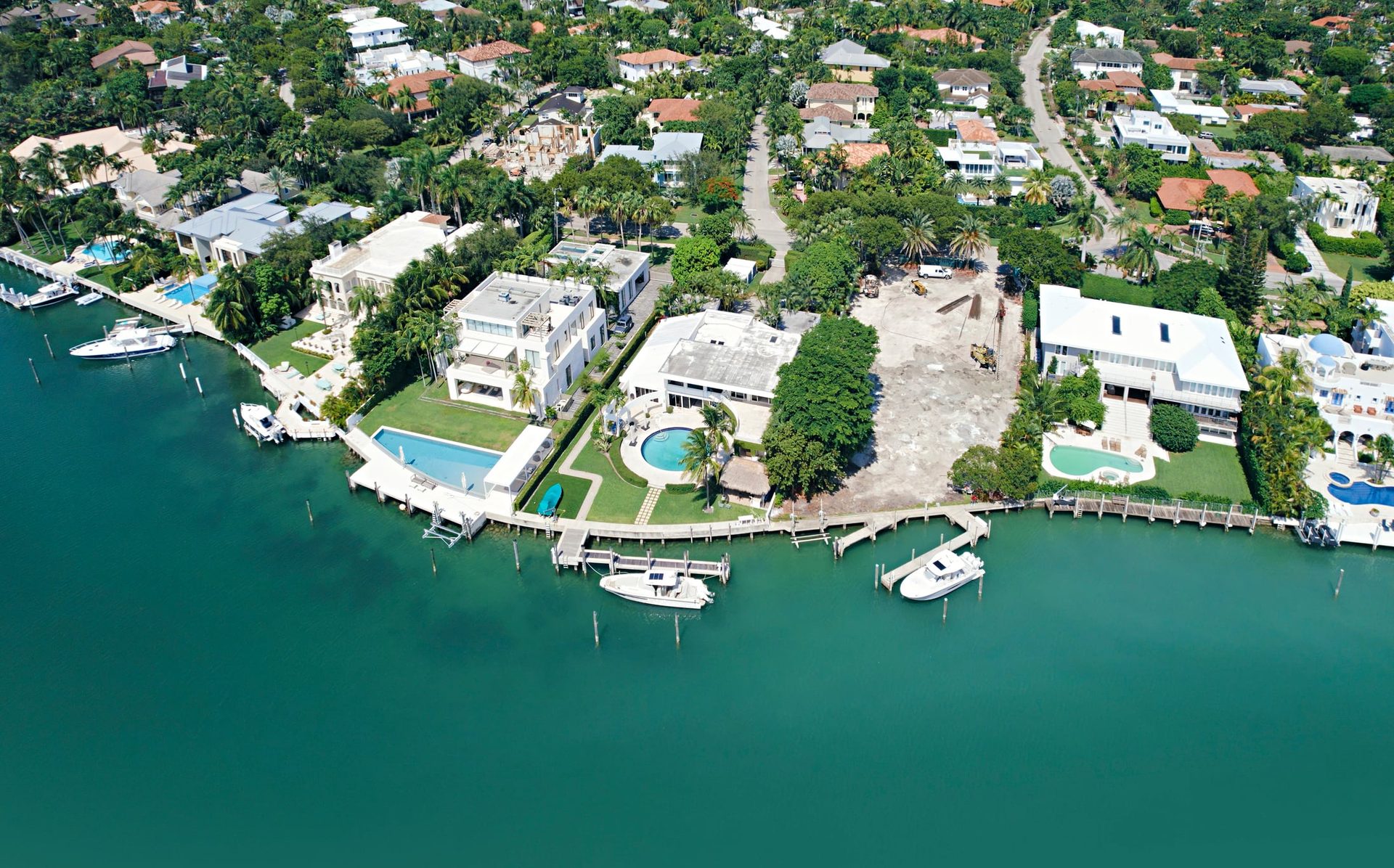
Fort Lauderdale has long been known as the “Venice of America,” a nickname tied to the waterways that shape the city’s lifestyle, real estate market, and luxury property values. Greater Fort Lauderdale has roughly 300 miles of inland waterways, with about 165 miles within the city of Fort Lauderdale itself. That network of canals, rivers, and Intracoastal access makes waterfront real estate one of the defining segments of the local market.
For real estate investors, that waterfront identity creates a specialized market. Properties with direct water access, yacht-friendly dockage, modern design, and proximity to the Intracoastal can attract strong buyer demand. At the same time, waterfront properties often require more careful underwriting than standard residential assets. Insurance, flood-zone exposure, roof age, seawall condition, renovation scope, and resale timing can all affect the investment plan.
In this environment, bridge loans can be a useful financing tool. A bridge loan is short-term real estate financing designed to help a borrower move through a transitional period. In Fort Lauderdale, that transition may involve acquiring a waterfront property quickly, completing renovations, refinancing existing debt, carrying a luxury home through a longer sales process, or finishing construction before a sale or permanent refinance.
This article explores why bridge loans matter in Fort Lauderdale’s waterfront market, how investors should think about property value, what lenders evaluate, and how a strong loan package can improve execution.
Why Fort Lauderdale Now?
Fort Lauderdale remains one of South Florida’s most distinctive real estate markets because of its combination of waterfront housing, boating infrastructure, luxury residential demand, and proximity to beaches, downtown, Port Everglades, and the broader Miami metropolitan area.
The broader market has become more selective. Citywide housing data from Redfin reported that Fort Lauderdale homes sold for a median price of about $578,000 in March 2026, with homes averaging 104 days on market. Realtor.com’s Fort Lauderdale market page showed a median listing price of $599,000 based on historical data through February 2026, with neighborhood-level prices varying widely across areas such as Central Beach, Coral Ridge, Victoria Park, Galt Mile, and Lauderdale Beach.
For investors, the takeaway is that pricing, property condition, and exit strategy matter. A more selective market can create opportunities when sellers become flexible, listings sit longer, or properties need capital improvements. It can also create risk when investors underestimate carrying costs, insurance costs, or the time needed to resell a luxury asset.
Waterfront properties often move differently than the citywide market. A canal-front home with limited dockage may have a different buyer pool than a deep-water estate with no-fixed-bridge access. A newly built home with hurricane-impact windows and updated systems may underwrite differently than an older property with deferred maintenance. This is why local knowledge, asset-level diligence, and financing structure are especially important.
2026 Waterfront Market Snapshot
Fort Lauderdale waterfront investing is shaped by several themes.
Selective buyer demand: Buyers continue to value waterfront access, outdoor living, and high-quality design, but many are more disciplined about pricing and property condition.
Longer marketing periods: Luxury homes can require more time to sell, especially when the buyer pool is narrow or the property requires a specific lifestyle match.
Insurance scrutiny: Wind, flood, and property insurance have become central to underwriting in coastal Florida.
Renovation and resilience: Updated roofs, impact windows, elevation considerations, newer systems, and storm-resilient construction can influence both value and lender comfort.
Dockage and boating access: Dock length, water depth, canal width, turning basins, and bridge clearance can materially affect a property’s appeal.
For investors with flexible capital, these conditions can create opportunities. A property with strong fundamentals but poor presentation may be repositioned. A stalled listing may become attractive at the right basis. A partially completed project may need capital to reach the finish line. In each case, bridge financing can help align capital with the business plan.
What is a Bridge Loan and How Does it Work?
A bridge loan is short-term financing secured by real estate. Investors often use bridge loans when they need capital for a defined period before selling the property, refinancing into longer-term debt, completing improvements, or stabilizing the asset.
Bridge loans are commonly used in Fort Lauderdale for:
-
Acquiring a waterfront home before permanent financing is available.
-
Closing quickly when a seller prioritizes certainty and speed.
-
Funding renovations that improve resale value.
-
Completing construction on a luxury or spec home.
-
Refinancing an existing loan while preparing the property for sale.
-
Holding a waterfront property through a longer listing period.
-
Accessing equity from an existing property for another investment.
Many bridge loans are structured with interest-only payments during the loan term. That can help investors manage cash flow while executing a renovation, construction, resale, or refinance plan. Loan terms often depend on the collateral, borrower profile, leverage, project timeline, and exit strategy.
Bridge loans typically carry higher costs than traditional bank financing because they are designed for speed, flexibility, and transitional scenarios. For many investors, the value comes from the ability to act quickly, preserve optionality, and structure financing around the property’s actual timeline.
Why Bridge Loans Work for Luxury Waterfront Homes
Luxury waterfront properties often require a financing approach that accounts for complexity. The asset may be valuable, but the path from acquisition to exit may involve several moving parts.
Speed
In competitive situations, sellers often value certainty of close. A buyer with bridge financing may be able to move faster than a buyer relying on a conventional bank process. Vaster’s Fort Lauderdale private lending page highlights private lending as a faster alternative to traditional lending, with an illustrative comparison of 10 days for private lending and 45 days for traditional lending.
Flexibility
Waterfront assets may require upgrades before resale. Renovations might include impact windows, roof work, dock improvements, landscaping, pool updates, kitchen and bathroom upgrades, or exterior living enhancements. A bridge loan can be structured around the acquisition, improvement plan, and expected exit.
Timing
Luxury waterfront homes may require a longer holding period than more liquid residential assets. The right buyer may be seasonal, international, boating-focused, or looking for a highly specific property type. A bridge loan can give an investor time to complete the plan without relying on an immediate resale.
Asset-Based Underwriting
Private lenders tend to focus heavily on the property, borrower liquidity, business plan, and exit strategy. This can be helpful when the asset is strong but the transaction does not fit a standard bank process.
How Waterfront Homes are Valued
In Fort Lauderdale, waterfront valuation starts with location, but it rarely ends there. Two homes with similar square footage can have very different values based on boating access, water frontage, condition, and buyer profile.
Key factors include:
Dockage: Buyers often evaluate dock length, water depth, power availability, and the ability to accommodate larger vessels.
No-fixed-bridge access: Properties with ocean access and no fixed bridges can appeal to yacht owners and boating-focused buyers.
Seawall condition: A seawall can be a major value factor. Deferred maintenance may require significant capital.
Canal width and turning basin: Navigability matters, especially for larger boats.
Proximity to the Intracoastal and inlet: Faster boating access can increase appeal.
Modern design: Open layouts, glass, natural light, indoor-outdoor living, pools, summer kitchens, and updated finishes can help a property compete.
Storm resilience: Impact windows, newer roofs, updated systems, elevation, and insurance documentation can improve marketability.
Submarket dynamics: Las Olas Isles, Harbor Beach, Rio Vista, Coral Ridge, Central Beach, and other waterfront areas each have distinct buyer pools and comparable sales patterns.
In today’s market, property-level risk factors are playing a larger role in valuation and financing decisions. Investors are paying closer attention to insurance availability, construction quality, and how long a property may need to be held before exit.
In the current market, a property’s resilience and documentation are just as important as its location. Lenders are paying closer attention to storm-readiness, insurance coverage, and how those factors impact both the holding period and the exit strategy.
— George Fraguio, VP of Origination, Vaster
Risks Lenders Evaluate
Fort Lauderdale waterfront properties can be excellent collateral, but lenders need to understand the risks that affect value, liquidity, and repayment.
Insurance and Flood-zone Exposure
Insurance is one of the most important considerations in coastal Florida. Broward County states that FEMA’s new Flood Insurance Rate Maps for the county became effective July 31, 2024, and encourages residents and businesses to review current flood zones to understand potential flood risk.
For a bridge loan, the lender may review flood insurance, wind coverage, hazard insurance, roof age, mitigation features, prior claims, and whether the property can maintain adequate coverage through the loan term.
Roof Age and Storm Resilience
Older roofs can create insurance challenges. Impact windows, reinforced openings, updated roofing, and storm-resistant construction can help support the underwriting story.
Seawall and Dock Condition
Marine improvements can be costly. A property with a failing seawall or dock may require a larger budget, additional reserves, or a more conservative valuation.
Borrower Liquidity
Carrying costs can be high on luxury waterfront homes. Lenders want to know that the borrower can cover interest, taxes, insurance, utilities, maintenance, HOA or association fees, and project costs.
Exit Strategy
A bridge loan needs a clear repayment path. The exit may be a sale, refinance, construction completion, or payoff from another source. In luxury waterfront lending, lenders often look for more than one credible exit path.
Why a Specialized Private Lending Partner Matters
Traditional banks can be a good fit for stabilized assets and borrowers who fit standard documentation requirements. Waterfront investment properties often involve timing pressure, renovation needs, large loan amounts, or non-standard borrower profiles.
Private lenders can review the full context of the transaction. That context includes the property, market, borrower experience, project scope, liquidity, reserves, and exit strategy.
For investors, the benefit of partnering with a private lender that specializes in Fort Lauderdale's waterfront market is the ability to have a lending conversation that can be tailored around the deal. A waterfront acquisition with a renovation budget may require one structure. A construction completion loan may require another. A refinance while preparing for resale may require a different approach. The goal is to match financing to the investment strategy and timeline.
Advantages of Private Lenders
Quick Closings
Private lenders can often move faster than traditional banks when the borrower has a clear package, the collateral is strong, and title, insurance, and valuation items are organized early.
Flexible Structures
Bridge loans can be structured around acquisition timing, reserves, renovation budgets, interest reserves, extension options, and exit expectations.
Local Expertise
Fort Lauderdale’s waterfront market is hyper-local. A lender familiar with South Florida can better understand the difference between submarkets, boating access, property condition, and buyer demand.
Experience with Complex Collateral
Luxury homes, waterfront properties, construction projects, short-term rentals, condos, and commercial assets may require more nuanced underwriting than a standard residential loan.
Vaster Case Studies: Waterfront Lending in Practice
Real-world execution often depends on how quickly capital can be deployed and how well the financing structure supports the business plan.
Case Study 1: Construction Bridge for an Ultra-Luxury Waterfront Spec Home
Vaster provided over $15 million in construction bridge financing for a luxury waterfront spec home in one of Fort Lauderdale’s premier neighborhoods. The project was already underway and required a financing structure that could support completion, carrying costs, and a potentially extended marketing period after delivery.
The loan was structured with reserves and flexibility around the exit timeline. The property’s modern design, storm-resilient construction features, and insurance positioning helped support the overall risk profile.
From a lending perspective, the key considerations included:
- Remaining construction scope.
- Budget accuracy and contingency planning.
- Sponsor experience.
- Liquidity to support carrying costs.
- Comparable sales for newly built waterfront homes.
- Insurance coverage and storm-resilience features.
- Realistic absorption timeline for a high-value asset.
The financing allowed the borrower to continue construction without disruption and prepare the property for market with a timeline aligned to luxury buyer demand.
Case Study 2: Bridge Loan for a Time-Sensitive Waterfront Acquisition
An experienced investor identified a canal-front property in Fort Lauderdale that had been sitting on the market due to condition, presentation, and pricing friction. The property had strong fundamentals, including waterfront access and value-add potential, but it needed targeted improvements to appeal to the next buyer.
The seller prioritized a fast and reliable closing. Vaster provided bridge financing that allowed the borrower to secure the asset and move into the improvement plan quickly.
Key elements of the deal included:
-
Speed of execution to secure the acquisition.
-
Analysis of the property’s waterfront features.
-
Review of renovation scope and budget.
-
Comparable sales for repositioned properties in the submarket.
-
Carrying costs during the improvement and resale period.
-
Exit strategy based on updated presentation and pricing.
The investor focused on targeted upgrades that improved marketability without turning the project into a full redevelopment. After improvements, the property was better positioned for resale and aligned more closely with current buyer expectations.
Frequently Asked Questions
Are bridge loan rates higher than bank loan rates?
Yes. Bridge loan rates are generally higher than traditional bank loan rates because they are short-term, flexible, and often designed for time-sensitive or complex transactions. Investors should weigh the cost of capital against the value of speed, certainty, and execution.
Do waterfront homes sell at a premium?
Waterfront homes often sell at a premium compared with non-waterfront properties, but the size of that premium depends on the property. Dockage, no-fixed-bridge access, water depth, condition, design, insurance, and submarket demand all influence value.
Can bridge loans include reserves for finish upgrades?
Yes. Some bridge loan structures can include reserves for approved improvements. These may include interior finishes, pools, landscaping, impact windows, dock work, or other upgrades that support the investment plan. The lender will review the scope, budget, timeline, and expected impact on value.
How long are bridge loan terms?
Bridge loan terms commonly range from 12 to 36 months, depending on the lender, asset, borrower profile, leverage, and business plan. Some structures may include extension options when the project or marketing timeline requires additional flexibility.
What are typical bridge loan requirements?
Typical requirements may include a strong collateral package, clear business plan, insurance information, liquidity verification, project budget, and exit strategy. Private lenders may place greater emphasis on the asset, borrower experience, liquidity, and repayment plan than a conventional bank would.
Can a bridge loan be used for a Fort Lauderdale waterfront renovation?
Yes. Bridge loans are often used for acquisition and renovation strategies. For waterfront homes, the lender will usually review the renovation budget, property condition, insurance, flood-zone exposure, seawall or dock condition, and expected resale or refinance path.
How quickly can a private lender close?
Closing speed depends on the property, borrower package, title, insurance, valuation, and loan structure. Private lending is typically considered a faster option than traditional lending, with loans closing in as little as 10 days for private lending compared with 45 days for traditional lending.
Strategic Partnership with a Local Lender
Fort Lauderdale waterfront investing rewards preparation, timing, and local knowledge. The properties are unique, the buyer pool can be specialized, and the financing strategy should reflect the realities of the market.
For investors evaluating a Fort Lauderdale waterfront acquisition, renovation, refinance, or spec home construction completion scenario, working with a private lender familiar with South Florida can help clarify financing options early in the process.
Vaster works with real estate investors across South Florida and offers private lending options designed for speed, flexibility, and complex real estate scenarios. Whether the opportunity involves a luxury waterfront home, a canal-front renovation, a short-term rental asset, or a commercial property near a key Fort Lauderdale corridor, early financing conversations can help investors better understand what is possible before they need to act.
Connect with a private lending expert today or call us at 305-673-3011
Disclaimer: Loan terms, rates, leverage, and approvals are subject to underwriting, borrower qualification, collateral review, and market conditions. This article is for informational purposes only and is not a commitment to lend.
Sources:
Discover What Makes Greater Fort Lauderdale the 'Venice of America' | Visit Lauderdale